Malaysia MM2H: The Geo-Arb Visa That Cuts Your Freedom Number by 40%
Updated July 2026 — key figures refreshed to current tax year and program values.
General information only. Not financial or legal advice. Verify current MM2H requirements at mm2h.gov.my. Full disclaimer →
Why Malaysia MM2H FIRE Stands Apart in the Geo-Arb Universe
Most geo-arb destinations force a trade-off. Low cost means infrastructure compromises. Western infrastructure means high cost. Malaysia is the exception to this pattern — which is exactly why Malaysia MM2H FIRE plans keep showing up in geo-arbitrage research.
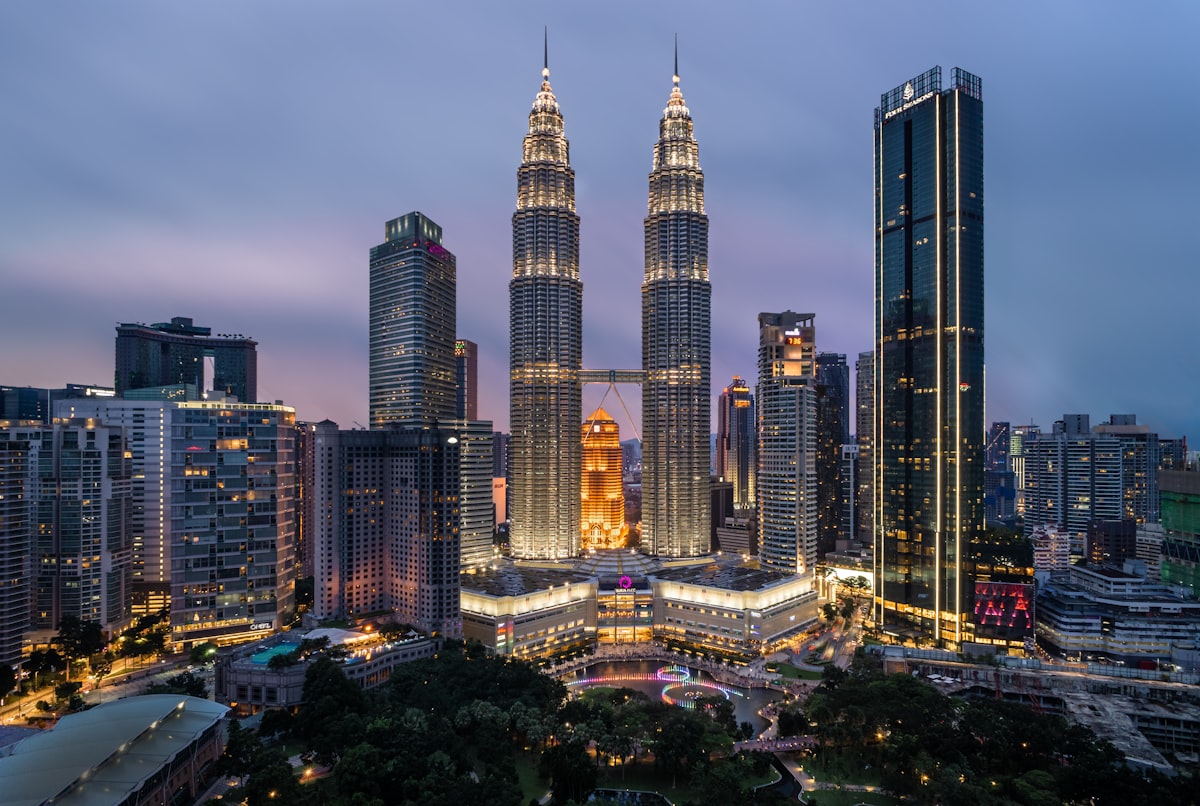
Kuala Lumpur and Penang have first-world infrastructure — fast internet, world-class private hospitals, modern airports, English-medium professional services — at a cost of living that is 60–70% lower than Sydney, Toronto, London, or Auckland. The English language is functional throughout the professional and commercial ecosystem. The food is extraordinary. The weather is consistent year-round (tropical, which is not for everyone, but consistent).
More relevantly for FIRE candidates: Malaysia has territorial taxation, a long-standing residence visa programme (MM2H), and a private healthcare system that is genuinely world-class at genuinely affordable prices. For a couple targeting $80,000 AUD/year in combined spending, Malaysia delivers a lifestyle broadly equivalent to a $180,000–$220,000 AUD/year lifestyle in Sydney.
That is the core geo-arb proposition. It’s real.
The MM2H Programme
MM2H (Malaysia My Second Home) is a long-stay residence visa for foreign nationals who meet minimum financial requirements. It is not a work visa — you cannot earn Malaysian employment income on MM2H. It is designed for retirees, passive income earners, and remote workers whose income comes from outside Malaysia.
Current MM2H tiers (mid-2026):
Silver Tier (most accessible):
– Minimum offshore income: none — official MOTAC terms (in force through 2026) confirm offshore income requirements were dropped for every MM2H category under the 2024 restructure
– Fixed deposit in Malaysian bank: USD $150,000 (approximately AUD $230,000)
– Minimum assets outside Malaysia: none — the separate liquid-assets requirement was also removed under the 2024 restructure; some outdated guides still cite a pre-2024 figure
– Minimum age: 25; minimum stay: 90 days/year in Malaysia
– Visa validity: 5 years, renewable
Gold Tier:
– Minimum offshore income: none — dropped for every MM2H category under the 2024 restructure
– Fixed deposit: USD $500,000
– Minimum assets: none — no separate liquid-assets requirement applies
– Visa validity: 15 years, renewable
Platinum Tier:
– Minimum offshore income: none — dropped for every MM2H category under the 2024 restructure
– Fixed deposit: USD $1,000,000
– Visa validity: 20 years, renewable
Mandatory property purchase (all tiers, from June 2024 restructure): All MM2H tiers now require a compulsory property purchase in Malaysia within 12 months of visa endorsement — Silver: minimum MYR 600,000 (~AUD $215,000), Gold: MYR 1,000,000, Platinum: MYR 2,000,000. Properties are subject to a 10-year sale restriction. Up to 50% of the fixed deposit can be released after the first year and applied toward the property purchase.
Minimum stay: Applicants under 50 must spend more than 90 days per year in Malaysia to maintain visa validity.
This mandatory property purchase adds a real cost layer to the Malaysia MM2H FIRE calculus that did not exist before the June 2024 restructure, and it is worth budgeting for from day one rather than treating the fixed deposit as the only cash outlay.
The Silver tier is where most FIRE candidates land. USD $10,000/month in offshore income at a 4% withdrawal rate requires a portfolio of approximately USD $3,000,000 (AUD $4,600,000). The fixed deposit requirement is an additional USD $150,000 that sits locked in a Malaysian bank account — it’s your money, earning interest, but not accessible for spending.
The honest assessment of the income threshold: USD $10,000/month is a high bar for most FIRE candidates in accumulation phase. This is the programme’s post-2021 reality — it was tightened substantially from earlier, more accessible versions. For FIRE candidates below this threshold, the alternative is Malaysia’s DE Rantau digital nomad pass (for remote workers) or a series of visa extensions, neither of which provides the long-term certainty of MM2H.
Malaysia’s Tax System
Malaysia operates a territorial tax system. For the purposes of foreign-sourced income — which is what most FIRE candidates draw from — this means: income earned outside Malaysia and remitted to Malaysia was previously exempt from Malaysian income tax. Foreign-sourced income remitted to Malaysia became taxable by default for tax residents from 1 January 2022, but Malaysia’s Budget 2026 extended an exemption for individuals — covering income already taxed at source, and now also foreign capital gains — through 31 December 2036, so most FIRE candidates drawing already-taxed foreign income remain exempt. Current thresholds and conditions are published by Malaysia’s Inland Revenue Board (LHDN). Any Malaysia MM2H FIRE plan needs to model this exemption boundary precisely.
The planning implication: This 2022 change matters. If you become a Malaysian tax resident and remit your portfolio income to Malaysia (dividend income, ETF distributions), it is now potentially subject to Malaysian income tax at rates up to 30%. Whether this applies to your specific income structure depends on how the income is classified, whether Malaysia has a double-taxation agreement with your source country, and the specifics of your visa category.
Practical position for most FIRE candidates: A significant proportion of portfolio income from Australian or UK ETFs is structured as capital returns or distributions that may be treated differently from pure dividend income under Malaysian tax law. Get Malaysian tax advice before finalising your strategy — this has changed enough in recent years that generic guidance is unreliable.
Home Country Tax Exit
🇦🇺 Australia: Leaving Australian tax residency requires breaking the ATO’s four-factor test (see the ATO’s residency guidance). CGT Event I1 (deemed disposal) triggers on departure — unrealised capital gains are crystallised. Model this before any Malaysia MM2H FIRE move.
🇬🇧 UK: HMRC’s Statutory Residence Test applies. UK-Malaysia have a double taxation agreement. UK exit rules are less punitive than Australia’s — no equivalent to CGT Event I1, but careful residency-break structuring is required.
🇨🇦 Canada: Canadian departure tax (deemed disposition) applies at exit — similar to Australia’s CGT Event I1. Canada-Malaysia DTA is in force. Get Canadian expat tax advice before departure.
🇳🇿 New Zealand: IRD’s 183-day and permanent place of abode tests apply. No NZ-Malaysia DTA exists — NZ residents get less treaty protection than Australians or Canadians. Dividends and investment income remitted to Malaysia may face double taxation without treaty relief. NZ-specific advice is essential.
🇺🇸 United States — critical: US citizens and green card holders are taxed on worldwide income regardless of where they live. Moving to Malaysia doesn’t end US tax obligations. The IRS still taxes your Malaysian rental income, your Australian ETF distributions, and any income you earn anywhere. Renouncing citizenship is a complex, permanent, costly decision. US expats in Malaysia face dual compliance (FBAR, FATCA). Use a US expat tax specialist.
KL vs Penang: Which City?
Kuala Lumpur is a proper metropolis — urban infrastructure, international flights to everywhere, enormous expat community, full range of international schools if needed, the full range of cultural and dining options. The KLCC area and Mont Kiara are the primary expat hubs. Cost: AUD $2,500–$3,500/month for a comfortable single lifestyle; AUD $3,500–$5,000 for a couple.
Penang (George Town specifically) is slower, more colonial, more culturally layered — widely considered one of the most liveable cities in Southeast Asia for long-term expats. World-class street food. Smaller international community but more integrated into local life. Cost: AUD $2,000–$2,800/month single; AUD $2,800–$4,000 couple. Penang also has Gleneagles and Pantai hospitals — genuinely world-class private healthcare at perhaps 15–20% of Australian private hospital costs.
The Freedom Number Impact
The clearest way to show the Malaysia effect: your Freedom Number in Malaysia vs your home country.
This is the core financial case for a Malaysia MM2H FIRE strategy — the compressed cost base does more to shrink your Freedom Number than almost any other single lever available to Australians considering geo-arbitrage.
| Location | Monthly spend | Annual spend | FIRE number (AUD) | FIRE number (USD) | FIRE number (GBP) | FIRE number (NZD) |
|---|---|---|---|---|---|---|
| Sydney | AUD $7,000 | AUD $84,000 | $2,100,000 | $1,344,000 | $1,063,000 | $2,310,000 |
| London | GBP £4,500 | GBP £54,000 | AUD $2,530,000 | $1,620,000 | $1,285,000 | AUD $2,780,000 |
| KL (Malaysia) | AUD $3,000 | AUD $36,000 | $900,000 | $576,000 | $456,000 | $990,000 |
| Penang (Malaysia) | AUD $2,400 | AUD $28,800 | $720,000 | $461,000 | $365,000 | $792,000 |
Moving from Sydney to KL reduces your Freedom Number from $2.1M to $900K — a reduction of more than 57%. Moving to Penang: from $2.1M to $720K — a 66% reduction. The same effect holds proportionally for UK, Canadian, and NZ comparisons.
This is why “geo-arb” isn’t just a lifestyle choice. For most people starting from a Western city cost base, a Malaysia MM2H FIRE move is a structural financial decision with decade-level implications for your timeline.
What Malaysia Isn’t
A Malaysia MM2H FIRE plan is not for everyone, and the reasons are real.
Climate: Tropical year-round. Hot and humid (30–35°C, 80%+ humidity). No seasons in the Western sense. Some people love this; many people who think they’ll love it discover they don’t after year two. Monsoon season (November–March in most of Peninsula Malaysia) brings heavy rain and flooding in some areas.
Long-term residency uncertainty: MM2H has been changed three times in the past decade, most significantly in 2021 when income thresholds were raised 10× overnight. There is no guarantee the current terms will persist. Malaysia does not offer a path to permanent residency or citizenship for MM2H holders.
Social conservatism: Malaysia is a majority-Muslim country with laws and social norms that differ from Australia, the UK, Canada, and NZ. LGBTQ+ relationships are not legally recognised and are subject to Sharia law for Muslims (civil law for non-Muslims, but social norms apply broadly).
No path to permanence: You can renew MM2H indefinitely, but you cannot become a permanent resident or citizen through this route. If you want a life in Malaysia, you are always a guest.
Who MM2H Is Right For
A Malaysia MM2H FIRE plan makes sense if: you have USD $500K+ in assets and USD $10K/month in passive income; you value English-medium infrastructure; you’ve spent time in Malaysia (not just one holiday) and genuinely enjoy the lifestyle; you’re prepared for the climate; and you’re comfortable with the country’s legal and social framework.
A Malaysia MM2H FIRE plan is less suitable for: FIRE candidates early in accumulation (the income threshold is too high); people who need certainty of long-term legal residence; people who are sensitive to heat and humidity; anyone for whom the social conservatism is a dealbreaker.
The full country comparison — Malaysia vs Portugal vs UAE vs 9 other destinations, with scoring on all 9 criteria — is in The Freedom Multiplier. Start your geo-arb analysis with the FIRE Calculator.
Here’s how I can help:
1. The FIRE Calculator — Free.
2. The Life Energy Calculator — See what your next purchase really costs in hours of your life. Free.
3. The Freedom Number Challenge — 5 days. Free.
© The Freedom Number. General information only — not financial, tax, or migration advice. Full disclaimer → | Affiliate disclosure →
Related Reading
Ready to find your Freedom Number?
The Complete FIRE Starter Guide — a 32-page playbook plus the editable FIRE Tracker spreadsheet. Your number, your timeline, your Coast FIRE and geo-arbitrage plan. Any country, any currency.
Get the guide — $27 →FIRE Blueprint