Death by 1,000 Cuts: How Western Life in 2026 Is Slowly Bleeding You Dry
Updated August 2026 — key figures refreshed to current tax year and program values.
This is Part 4 of The System Series — six essays on why the modern economic system is designed to keep you working, spending, and compliant.
← Part 3: Australia’s Big Fat Monopoly
Part 5: The Moment You Realise You’re Trapped →
Disclosure: The views expressed in The System Series are the opinions of the author and are intended for general informational and educational purposes only. They do not constitute financial, legal, or professional advice. Full disclaimer →
Nobody takes a large chunk of your life.
This is what cost of living 2026 looks like in practice — not one dramatic loss, but a thousand small ones.
They take it in small pieces — a dollar here, a levy there, a surcharge you didn’t notice, a toll that went up 4% in January, a fee that’s been quietly auto-renewing since 2019. Individually, each cut is negligible. Collectively, they are devastating.
This is the defining financial reality of Western life in 2026: you are not robbed. You are bled. Slowly, continuously, through a thousand small mechanisms designed to be individually too small to fight and collectively too large to survive without working full-time to pay for them.
Let’s count the cuts — the hidden cost of living that bleeds you dry.
If you want the official cost of living Australia data behind these numbers, that Bureau of Statistics index is the place to start.
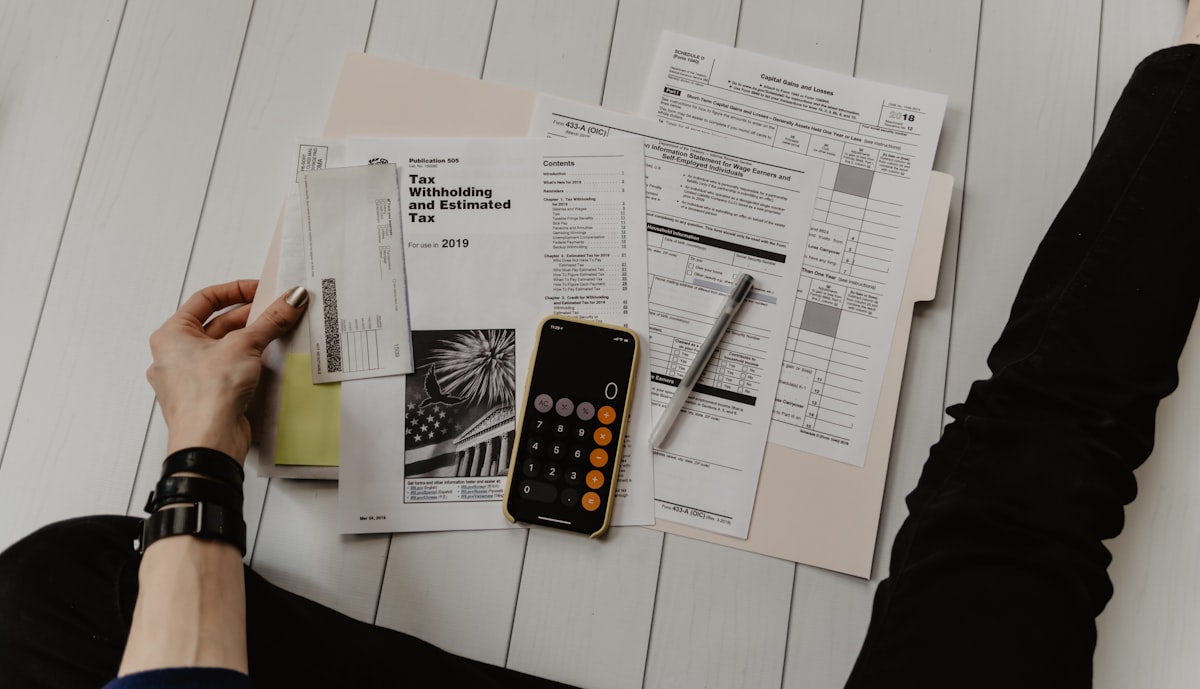
The Tax Stack
Start with income tax — the most visible cut.
In Australia, a person earning $120,000/year pays approximately $28,900 in income tax (2026-27 rates), leaving $91,100. Tax rate: ~24%. Painful, but visible and understood.
What most people don’t account for is that income tax is not the tax. It is the first tax.
That’s the tax layer alone — before the rest of the cost of living Australia tally even starts.
GST: 10% on almost everything you buy. On $60,000 of consumer spending, that’s $6,000/year — invisible because it’s embedded in the price.
Stamp duty: On a $900,000 Sydney property, approximately $35,000 — a one-time lump sum paid to the state government for the act of buying a home. No service rendered. Pure transaction tax.
Land tax: For investment property owners, annual state tax on the unimproved value of land. Rates vary by state, but a $800,000 investment property in NSW attracts approximately $2,900/year.
Medicare Levy: 2% of taxable income — $2,400/year on $120K income — on top of regular income tax.
Medicare Levy Surcharge: If you don’t have private health insurance and earn over $105,000, add 1–1.5% — another $930–$1,800/year — as a penalty for not participating in the private health insurance industry.
Superannuation guarantee tax quirk: Super contributions are taxed at 15% on the way in, your earnings taxed at 15% while inside, and withdrawals taxed at 0% after 60. This is actually favourable. But the compulsory 12% SG contribution is not money you control — it’s money locked away until you’re 60, whether you want it or not.
Fuel excise: Currently 53.7 cents per litre (indexed 3 August 2026, after the temporary excise cut expired). On 50 litres/week, that’s $1,396/year in pure excise before the GST that’s levied on top of the excise. A tax on a tax.
Capital gains tax: When you sell investments or property, gains are added to your income and taxed at your marginal rate (with a 50% discount for assets held over 12 months). On a $200,000 capital gain, that’s potentially $40,000–$47,000 in tax — after you’ve already paid tax on the income you used to fund the original investment.
Add these together for a $120,000 earner with a mortgage, a car, and moderate investments:
| Tax | Annual Amount |
|---|---|
| Income tax | $26,500 |
| GST (estimated) | $6,000 |
| Medicare levy | $2,400 |
| Fuel excise | $1,396 |
| Council rates | $1,800 |
| Medicare levy surcharge (if applicable) | $1,200 |
| Stamp duty (amortised over 10-year ownership) | $3,500 |
| Total | ~$42,800 |
On $120,000 gross income, approximately $42,800 — 36% — goes to government before you’ve bought a single thing.
That’s not a complaint about public services, many of which are valuable. It’s a statement of arithmetic. More than a third of every dollar earned goes to the state before you’ve had a chance to deploy it toward your own freedom.
The Infrastructure Toll
Australia has built a road network that it now charges you to use — on top of the fuel excise, registration fees, and council levies that were ostensibly funding roads.
Tolls are one of the quietest line items in the cost of living 2026 — easy to miss until you add up a full year.
Sydney tolls, for a typical western Sydney commuter using the M7, M5, and Cross City Tunnel, run to $3,000–$5,000/year. This is not optional — it’s the road infrastructure built for the city they’ve been encouraged to live in.
In Melbourne, a combination of CityLink and EastLink tolls adds $1,500–$3,000/year for outer suburban commuters.
Brisbane’s toll network similarly extracts $1,500–$2,500/year from regular commuters.
The mechanism: the government (or a privatised operator) builds or upgrades infrastructure using public money, then charges users for access, then counts the toll revenue separately from the tax revenue that was meant to fund roads.
You are being charged twice. Most people simply accept this as part of the cost of living in a city, because the alternative — not using the road — isn’t practically available.
Fuel excise + registration + CTP insurance + tolls + parking: the true annual cost of car ownership and commuting for most Australian metro workers runs to $12,000–$18,000/year. That’s $1,000–$1,500/month for the privilege of getting to work to earn money.
The Subscription Tax
A newer form of extraction, perfected in the last decade.
Netflix: $22.99/month. Spotify: $11.99/month. Amazon Prime: $9.99/month. Adobe Creative Cloud: $87.99/month. Microsoft 365: $12.99/month. Antivirus: $6.99/month. Cloud storage: $3.99/month. News site: $4.99/month. Gym: $65/month. LinkedIn Premium: $59.99/month.
Individually, each is trivially small. The question on your credit card statement: “Is $9.99/month reasonable for this?” Answer: yes, probably.
But the aggregate. The average Australian household now carries 12+ active subscription services, costing $200–$400/month — $2,400–$4,800/year.
That’s a full subscription tax baked into the cost of living that most households never formally tally.
These services are designed to be invisible. The monthly charge is small enough to never trigger a review. The cancellation process is deliberately frictionless to start and friction-heavy to stop. The “free trial” converts to a paid subscription at a moment most people don’t notice.
You don’t own any of it. You are renting access, indefinitely, to things that would previously have been one-time purchases. Software, music, films — products that once cost $20 once now cost $10/month forever. The NPV of the subscription model, for the seller, is vastly superior to the one-time sale model. For the buyer, it’s the opposite.
The Fine Economy
Modern government has increasingly monetised compliance — not as public safety, but as revenue.
Speed cameras in Australia are deployed with stated road safety rationales. They are also, transparently, revenue instruments. NSW alone generates $200M+ annually from speed camera fines. Victoria generates $600M+. The cameras are concentrated not at genuinely dangerous intersections but at locations with high traffic volume and minor speed differentials — zones where the “offence” is travelling 65km/h in a 60km/h zone at 2am.
Fines like these are now a recognised part of the cost of living Australia in 2026, even though no government department labels them that way.
Parking fines, which in Sydney inner suburbs regularly exceed $300 for minor infractions, are managed by councils with explicit revenue targets. The 2016 NSW parliamentary inquiry into parking fines found that some councils were issuing fines against their own parking officers’ discretion to meet revenue budgets.
Administrative fees, penalties for late payment, surcharges for paying by card, fees for paper statements: every interaction with a large institution now carries a potential additional charge. The nominal function of these fees is to cover costs. The actual function is incremental revenue extraction from a customer who has no alternative.
None of these individual amounts is catastrophic. Together, they represent a continuous low-level drain that most people experience as vague financial stress without being able to identify a single cause.
The Compliance Burden: The Real Cost of Living 2026
Beyond money, there is the time cost of modern Western compliance.
Tax returns, BAS statements, insurance renewals, registration renewals, council development applications, building permits, working-with-children checks, professional registrations, licensing requirements, compliance training — the bureaucratic overhead of simply existing as an adult in 2026 Australia runs to dozens of hours per year for ordinary citizens and hundreds of hours for small business operators.
This is not an accident. Every new regulation, every new licensing requirement, every new form is an employment guarantee for someone in the compliance industry. And it is a cost that falls disproportionately on individuals and small operators — large corporations have compliance teams; sole traders have weekends.
The goal of regulation is ostensibly protection. The effect, frequently, is the creation of barriers that make it harder to operate independently of large institutional structures and easier to remain an employee.
What the Cost of Living Australia Cuts Add Up To
Let’s total a realistic annual extraction for a professional earning $130,000/year in Sydney, with a mortgage, a car, and modest lifestyle:
This is the real cost of living Australia in 2026, quantified rather than just felt.
| Category | Annual Cost |
|---|---|
| Income tax + Medicare | $35,000 |
| GST on spending | $7,000 |
| Mortgage (interest component) | $28,000 |
| Tolls + registration + CTP | $5,500 |
| Council rates | $2,000 |
| Private health insurance | $3,500 |
| Subscriptions | $3,600 |
| Fuel excise | $1,300 |
| Fines, fees, surcharges (est.) | $1,500 |
| Stamp duty (amortised) | $3,500 |
| Total extracted | $90,900 |
On $130,000 gross, approximately $91,000 — 70% of gross income — goes to taxes, levies, fees, interest, and institutional charges before genuine discretionary spending begins.
The cuts are not catastrophic. They are relentless. And they are specifically designed to be small enough that each one, individually, produces less resistance than the cost of fighting it.
The FIRE Exit
The single most effective response to the death-by-cuts economy is financial independence — not because it eliminates all taxes and costs (it doesn’t), but because it changes your relationship to them fundamentally.
Whatever cost of living 2026 throws at you next, the only durable exit is enough invested assets that none of it matters.
When your income is earned through your labour — when you must show up and keep earning — every cut is a constraint. You can’t stop paying. You can’t reduce the tax by working less, because working less means less money for everything.
When your income is generated by assets, the equation shifts. You control how much you draw. You can structure your affairs to minimise taxable income (drawing below income tax thresholds, utilising franking credits, managing capital gains through timing). You can reduce your need for the expensive infrastructure — the car, the CBD commute, the expensive city — because you have time to design alternatives.
You cannot opt out of the system entirely. But you can choose how deeply it has its hands in your pockets.
The path is simple, if not easy: build assets until your passive income exceeds your expenses. Then redesign your life around what you actually value, rather than what the system needs you to consume.
The cuts will keep coming. Your Freedom Number is your shield.
Continue reading: Part 5 — The Moment You Realise You’re Trapped →
Calculate your Freedom Number →
Disclaimer: The views expressed in The System Series are the opinions of the author and are intended for general informational and educational purposes only. They do not constitute financial, legal, or professional advice. Full disclaimer →
Ready to find your Freedom Number?
The Complete FIRE Starter Guide — a 32-page playbook plus the editable FIRE Tracker spreadsheet. Your number, your timeline, your Coast FIRE and geo-arbitrage plan. Any country, any currency.
Get the guide — $27 →FIRE Blueprint