Sequence of Returns Risk: Why Retiring Into a Bad Market Is the Real Danger
Disclosure: The views expressed in this post are the opinions of the author and are intended for general informational and educational purposes only. They do not constitute financial advice. Full disclaimer →
Two people can retire with the identical portfolio, the identical average return over 30 years, and the identical spending — and one runs out of money while the other doesn’t. The difference is the order the returns happen in.
This is sequence of returns risk, and it’s the specific reason safe withdrawal rate research keeps landing below the popular “4% rule.”

What Sequence of Returns Risk Actually Is
Average annual return over a multi-decade period doesn’t determine whether a portfolio survives — the order those returns arrive in does, once regular withdrawals are being taken out at the same time.
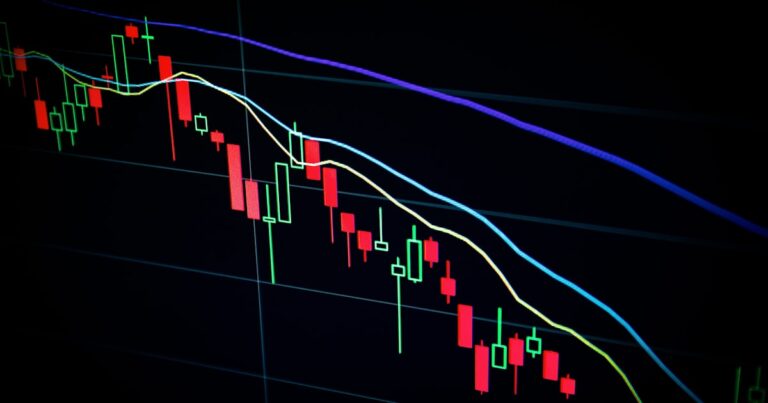
A portfolio that loses 20% in year one of retirement, then recovers over the following years, ends up in a materially worse position than one that gains 20% in year one and gives it back later — even if the long-run average return is identical — because withdrawals taken during the early down years lock in losses that can never be earned back on that portion of the portfolio.
This risk is largest in the first 5-10 years of retirement and shrinks considerably after that, since a smaller fraction of the original portfolio remains exposed to a single bad stretch. It’s one of several factors Moneysmart’s retirement income guidance flags as worth understanding before setting a drawdown plan.
Why This Is the Reason Safe Withdrawal Rates Sit Below the Historical Average
The long-run historical average return on a diversified equity portfolio is well above 4% a year. The reason retirement researchers don’t recommend withdrawing at that average is precisely sequence risk — a withdrawal rate has to survive the worst sequences in the historical record, not the average one, to be considered “safe” at a high confidence level.
Morningstar’s 2026 retirement-income research puts the base-case safe starting withdrawal rate at 3.9% (up from 3.7% in 2025) for a 30-year retirement with roughly 90% confidence of not running out — for a portfolio holding 30-50% in equities with the remainder in bonds and cash. On a $1 million portfolio, that’s a $39,000 first-year withdrawal, adjusted for inflation in subsequent years. A more flexible spending approach — cutting back after a bad year rather than adjusting purely for inflation — can push the supportable starting rate meaningfully higher, in Morningstar’s research to as much as 5.7%.
What This Means for a FIRE Timeline
A FIRE retirement typically spans considerably longer than the 30-year window most safe-withdrawal-rate research is built around, since retirement can start decades earlier than a standard retirement age. This is the mechanical reason many FIRE plans use a lower starting withdrawal rate than the general-population base case, or build in flexibility to reduce spending after a poor sequence of early returns — a longer time horizon means more opportunity for a bad early sequence to do lasting damage, all else equal.
The Free FIRE Calculator models a Freedom Number using a standard 4% assumption as a starting reference point — worth stress-testing against a more conservative rate given the above, particularly for an earlier-than-standard retirement date.
For anyone drawing down via an account-based pension once inside super, the same sequence-of-returns logic applies to structuring flexible minimum and maximum drawdowns.
Frequently Asked Questions
What is sequence of returns risk?
The risk that the specific order investment returns arrive in — not just their long-run average — determines whether a portfolio survives regular withdrawals, because losses taken early in retirement, while withdrawals are also being made, can permanently impair a portfolio in a way the same losses arriving later would not.
Is the 4% rule wrong?
The original 4% rule research (the “Trinity Study”) was based on a 30-year horizon and a specific historical U.S. return dataset. More recent research, including Morningstar’s 2026 update, puts the base-case safe rate somewhat lower (3.9%) under current return and inflation assumptions — not because the original research was flawed, but because market conditions and time horizons vary.
How can sequence of returns risk be managed?
Common approaches include holding 1-3 years of spending in cash or bonds to avoid selling equities during a downturn, using a flexible withdrawal strategy that reduces spending after a bad year rather than a fixed inflation-adjusted amount, and starting with a lower withdrawal rate for a longer retirement horizon. None of these eliminate the risk, only reduce its impact.
Safe withdrawal rate research is updated periodically by various institutions as market and inflation assumptions change — figures in this post reflect Morningstar’s published 2026 research as of August 2026.
Written by The Founder — currently employed full-time and building toward $20,000/month in passive income.
Here’s how I can help:
1. The FIRE Calculator — Find your financial independence date in 2 minutes. Free.
2. The Life Energy Calculator — See what your next purchase really costs in hours of your life. Free.
3. The Freedom Number Challenge — 5 days. 5 emails. Your FIRE number, calculated. Free.
© The Freedom Number. Factual information and general commentary only — not financial advice. Full disclaimer → | Affiliate disclosure →
Ready to find your Freedom Number?
The Complete FIRE Starter Guide — a 32-page playbook plus the editable FIRE Tracker spreadsheet. Your number, your timeline, your Coast FIRE and geo-arbitrage plan. Any country, any currency.
Get the guide — $27 →FIRE Blueprint