Australia, A Big Fat Monopoly: How a Few Corporations Own Everything You Buy
This is Part 3 of The System Series — six essays on why the modern economic system is designed to keep you working, spending, and compliant.
← Part 2: The School System Was Built to Make You Obedient
Part 4: Death by 1,000 Cuts — Western Life in 2026 →
Disclosure: The views expressed in The System Series are the opinions of the author and are intended for general informational and educational purposes only. They do not constitute financial, legal, or professional advice. Full disclaimer →
Walk into any supermarket in Australia. This is what Australia corporate monopoly power looks like in daily life — not abstract, just inconvenient.
You have two choices: the Green Supermarket or the Red Supermarket. Between them, they control approximately 67% of the Australian grocery market. Add a German-owned discount chain and the independent grocers and you’re at roughly 90%. In most suburban and regional areas, you have no real choice at all — there is one supermarket, owned by one of two companies, and if you don’t like the price, you can drive 40 minutes.
Now look at your bank. There are four. The “Big Four” control around 80% of Australian home loans and approximately 75% of all banking assets. The smaller regional banks and credit unions that survive largely operate as feeder institutions — often acquired by or partnered with the majors.
Your airline: the national carrier or its only major rival. For most domestic routes, those are your options. And since its only major rival’s 2020 administration and restructure, the pricing behaviour of both carriers has been notably less competitive.
Your internet: three major providers — one of which now owns a rival brand, all operating on infrastructure that is largely government-subsidised and in many cases identical (the NBN).
Your health insurance: four dominant players in a sector the government effectively mandates you participate in via the Medicare Levy Surcharge.
Your petrol: a handful of fuel brands, several of them just rebadged versions of the same few suppliers. Prices that move in near-perfect synchrony despite the companies being ostensibly competitors.
This is not a free market. This is a cartel economy — and you are paying for it every single day. This is what a corporate monopoly looks like.
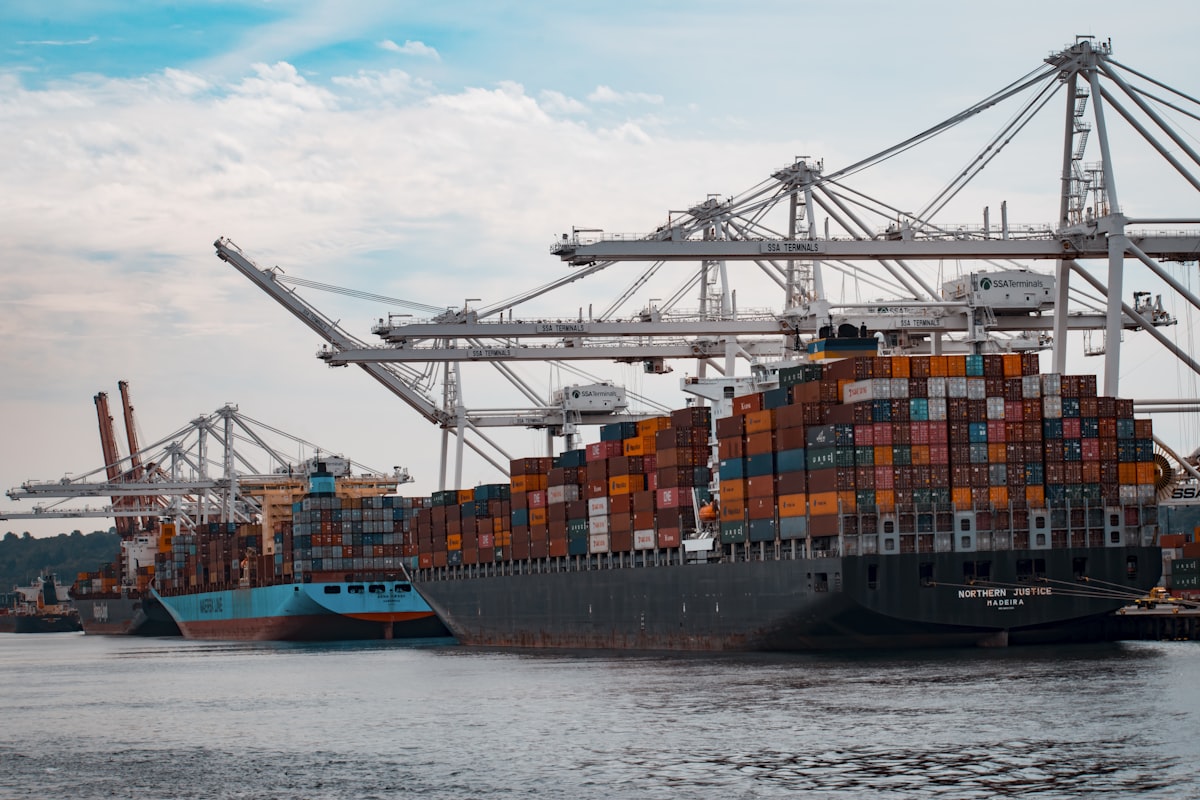
The Math Behind Australia Corporate Monopoly Power
The standard economic measure of market concentration is the HHI (Herfindahl-Hirschman Index). Markets above 2,500 are classified as “highly concentrated” by most competition regulators.
Australia’s grocery sector HHI sits above 3,500. Banking is above 2,800. Airlines are effectively a duopoly on most routes.
For context: the US considers a market with an HHI above 2,500 to warrant regulatory scrutiny. Australia’s most essential consumer markets sit well above that threshold — and have for decades.
The competition regulator has been noting concerns about grocery market concentration since the early 2000s. Its 2024 supermarket inquiry found evidence of pricing coordination, reduced competition, and supplier pressure tactics that would be impossible in a genuinely competitive market.
The result is quantifiable. A 2023 comparison by consumer groups found that the same basket of 30 comparable grocery items cost 20–35% more in Australia than equivalent items in similarly developed economies — the US, UK, and Germany — where market concentration is lower. That gap is the clearest dollar evidence of Australia corporate monopoly pricing in everyday life.
Your grocery bill is not high because Australia is expensive. It’s high because two companies have decided it should be.
The Bank Fee That Nobody Notices
The Australian banking oligopoly extracts wealth from ordinary Australians in ways that are individually small and collectively enormous.
Consider: Australia’s Big Four banks collectively earned approximately $32 billion in net profit in 2023. They did this primarily by:
- Lending depositors’ money at rates significantly higher than what they pay depositors
- Charging account fees on products that cost them near-zero to maintain
- Selling financial products (insurance, investment accounts, superannuation) to captive customers
- Operating in a regulatory environment that creates substantial barriers to new entrants
The net interest margin — the gap between what the bank pays for money and what it charges to lend it — consistently runs at 1.7–2.0% in Australia, among the highest in the developed world. In Canada, a comparable banking oligopoly, the NIM runs at 1.5–1.7%. In the UK, more competitive banking market, it’s lower again.
That 0.3–0.5% gap, applied to Australia’s $2.2 trillion in outstanding mortgages, represents $6–11 billion per year extracted from Australian mortgage holders — pure oligopoly rent, above what would exist in a competitive market.
On a $600,000 mortgage at 30 years, the difference between Australia’s oligopolistic rate and a genuinely competitive rate is approximately $30,000–$80,000 in excess interest payments over the life of the loan.
You are paying tens of thousands of dollars extra on your mortgage — not because of market conditions, but because four companies have agreed (tacitly, legally, consistently) not to compete aggressively for your business.
The Supermarket Squeeze: Both Ends
The concentration of Australia’s grocery sector extracts wealth in two directions simultaneously — from consumers on one end and suppliers on the other.
On the consumer side: margins on groceries run significantly higher in Australia than comparable markets. The 2024 inquiry by the competition regulator found evidence of “drip pricing,” misleading “specials” that were never genuinely discounted, and shelf placement fees that functionally tax smaller suppliers out of visibility.
On the supplier side: the Green Supermarket and the Red Supermarket, controlling two-thirds of the market, have extraordinary power over the Australian food producers who supply them. Farmers and food manufacturers have documented cases of:
- Unilateral price reductions demanded after contracts were signed
- “Pay-to-play” requirements — fees charged to suppliers for shelf placement, promotions, or simply continuing to be stocked
- Exclusivity arrangements that prevent suppliers from selling through other channels
- Delisting threats used to extract cost concessions
The family farm or small food producer has a choice: accept the supermarket’s terms, or sell to nobody. It is not a negotiation. It is a dictation. That’s corporate monopoly power exercised quietly, supplier by supplier, with no headline event to point to.
The cost of this squeeze flows both ways: consumers pay more, and the Australian agricultural and food manufacturing sector is gradually hollowed out, unable to sustain the margins needed for investment or growth.
Why Nothing Changes
The obvious question: if this is so clearly harmful, why doesn’t the government fix it?
The answer involves three reinforcing mechanisms:
1. Regulatory capture. The competition regulator has limited powers and limited resources relative to the legal teams of the companies it’s meant to regulate. Companies invest heavily in lobbying, in cultivating relationships with decision-makers, and in the revolving door between corporate senior management and regulatory/government roles. The regulator gradually comes to see the industry’s perspective as the default reasonable position.
2. Electoral incentives. Breaking up the Green Supermarket or forcing the Big Four banks to compete more aggressively would produce short-term economic disruption — job losses, branch closures, price volatility — that would dominate news cycles. The long-term benefit of a more competitive economy is diffuse and hard to attribute. Politicians optimise for the next election, not the next decade.
3. Voter passivity. Australians are, culturally, remarkably tolerant of being gouged. The “tall poppy” cultural phenomenon cuts both ways — we’re uncomfortable criticising corporations as loudly as we’d need to to force change. We complain about supermarket prices and then keep shopping at the Green Supermarket because the alternative is a 20-minute drive.
The system persists because the people it benefits have enormous resources to maintain it, and the people it harms have internalised it as normal. That’s market concentration functioning exactly as designed — quietly, durably, and almost invisibly to the people paying for it.
The FIRE Implication
Every dollar you pay in oligopoly rent — the premium on your groceries, the excess interest on your mortgage, the inflated airline fare, the bank fee that serves no purpose — is a dollar not building your Freedom Number.
Over a 20-year period, the difference between Australian oligopoly pricing and genuinely competitive pricing on your essential spending is not trivial. It’s tens of thousands of dollars. Possibly more. That’s the long-run cost of Australia corporate monopoly structures left unaddressed — paid by you, not by the companies extracting it.
You cannot negotiate your way out of most of this. You can, however:
- Understand it — so you stop treating high costs as personal financial failure rather than structural extraction
- Optimise what you can — credit unions and challenger banks for banking, online grocery alternatives where available, price comparison tools, bulk buying cooperatives
- Accelerate your exit — the fastest way out of the oligopoly’s grip is to reduce your dependence on earned income as quickly as possible. A portfolio generating $60,000/year passive income doesn’t care that the Green Supermarket raised bread prices 15%. Your time and your freedom become your hedge against a system designed to extract from you indefinitely.
The corporations own the market. They don’t own your timeline.
Build your Freedom Number. Get out from under it.
Continue reading: Part 4 — Death by 1,000 Cuts: Western Life in 2026 →
Calculate your Freedom Number →
Disclaimer: The views expressed in The System Series are the opinions of the author and are intended for general informational and educational purposes only. They do not constitute financial, legal, or professional advice. Full disclaimer →
Related Reading
Ready to find your Freedom Number?
The Complete FIRE Starter Guide — a 32-page playbook plus the editable FIRE Tracker spreadsheet. Your number, your timeline, your Coast FIRE and geo-arbitrage plan. Any country, any currency.
Get the guide — $27 →FIRE Blueprint