SE Asia Is Not Third World — And This Misconception Is Keeping You Trapped
This is Part 6 of The System Series — six essays on why the modern economic system is designed to keep you working, spending, and compliant.
← Part 5: The Moment You Realise You’re Trapped
Read the full series from Part 1 →
Disclosure: The views expressed in The System Series are the opinions of the author and are intended for general informational and educational purposes only. They do not constitute financial, legal, or professional advice. Full disclaimer →
Southeast Asia keeps showing up on the shortlist for people chasing geographic arbitrage — and almost everyone gets the pitch wrong before they even start packing.
Say “I’m thinking of moving to Thailand” to a room full of Australian professionals and watch the responses.
“Is it safe?” (Safer than most Australian cities by violent crime statistics.)
“What about the healthcare?” (Bangkok’s Bumrungrad Hospital is ranked among the top 50 hospitals in the world and treats more international patients annually than any hospital in the United States.)
“But it’s so… basic.” (Said by someone who has never been, or who visited a beach resort in 2009 and extrapolated an entire country from it.)
“Could you really live there long-term?” (600,000+ Westerners do, including thousands of Australian professionals who made the move and have never looked back.)
The “third world” perception of Southeast Asia is not a geographic assessment. It is a psychological defence mechanism — a way of ruling out an option that, if honestly examined, would require a rethink of some foundational assumptions about what an adult life is supposed to look like.
It is also, financially, one of the most expensive misconceptions a high-income Australian can hold about Southeast Asia.
The Data First
Let’s establish what Southeast Asia actually looks like in 2026, by the numbers.
Thailand
- GDP per capita (PPP): $21,700 USD — comparable to Malaysia, ahead of Mexico and Brazil
- Internet speed (Bangkok): Average 240 Mbps — faster than Australian average
- Hospital accreditation: 62 JCI-accredited hospitals, more than any country in Asia outside South Korea
- Michelin-starred restaurants: 45 in Bangkok alone
- Expat population: 2.5 million registered, growing year-on-year
- Crime index: 38.9 (Numbeo) vs Sydney 46.2, Melbourne 45.1
Vietnam
- GDP growth 2023: 5.1% — one of the fastest-growing major economies globally
- Ho Chi Minh City internet: 170 Mbps average
- Co-working spaces in HCMC: 200+ — more per capita than most Australian cities
- Foreign direct investment: $36 billion in 2023, including major tech manufacturers
Bali, Indonesia
- Resident visa program: Indonesia’s new E33G visa allows remote workers to live tax-free for up to 5 years
- Infrastructure investment: $40 billion planned infrastructure spending 2024–2029
- International schools: 30+ English-language schools in the Canggu-Seminyak-Ubud corridor alone
Malaysia
- Infrastructure rating: Ranked 32nd globally by World Economic Forum — ahead of Italy, Spain, Portugal
- Kuala Lumpur internet: 260 Mbps average — significantly faster than Australia’s average of ~55 Mbps
- English proficiency: 6th highest in Asia, functional in all major cities
- Healthcare system: Ranked 49th globally by WHO — one position below the UK
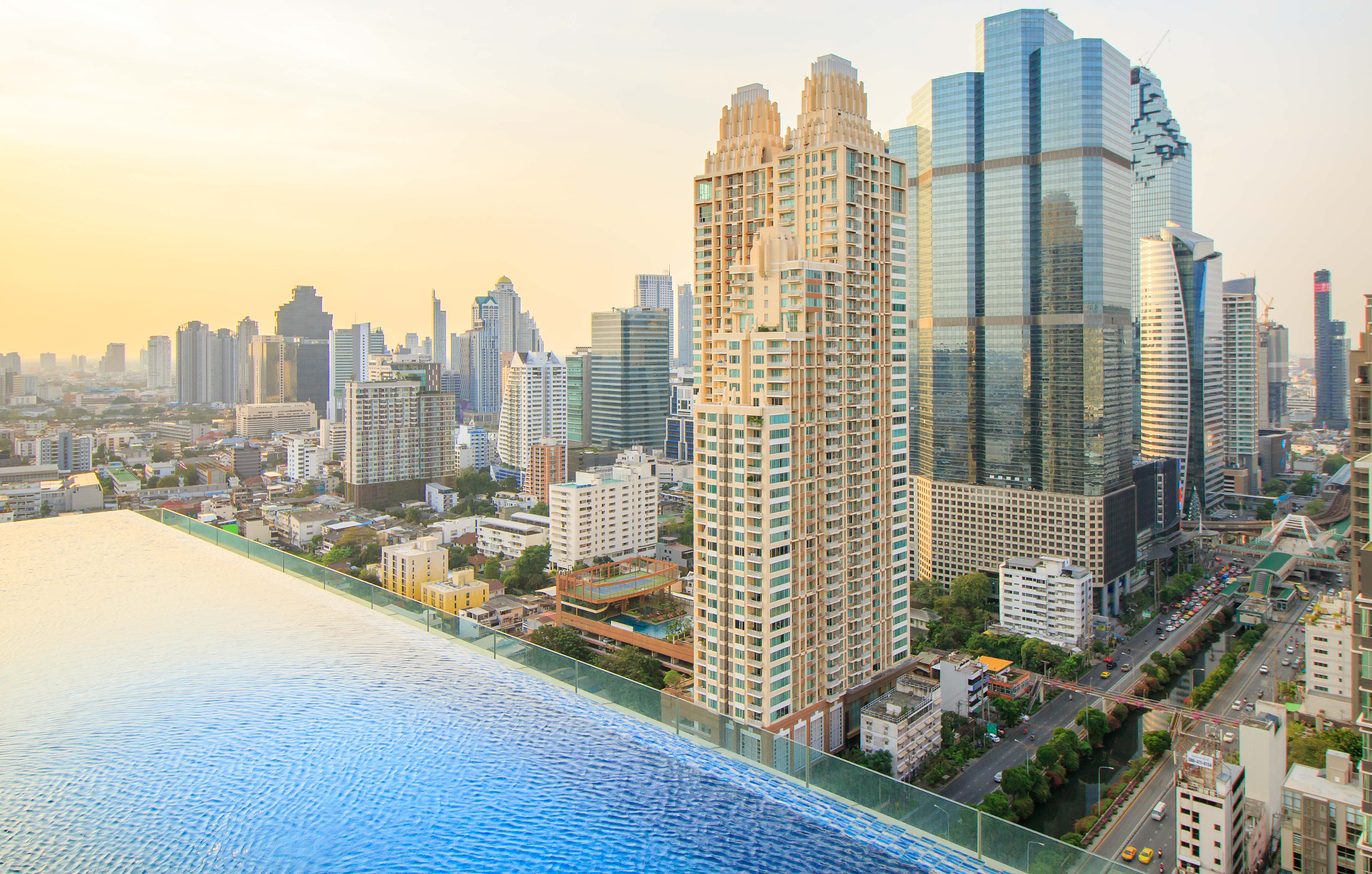
These are not developing countries. They are developing in the sense that their GDP per capita is growing rapidly — but that growth is happening from a base of functioning infrastructure, sophisticated cities, excellent healthcare, and quality of life that is, on measurable dimensions, competitive with or superior to Australian capital cities in multiple categories.
What “Third World” Actually Means
The term “Third World” was coined in 1952 by French demographer Alfred Sauvy to describe countries aligned with neither the Western bloc (First World) nor the Soviet bloc (Second World) during the Cold War. It had nothing to do with development levels — it was a geopolitical classification.
The Cold War ended in 1991.
The term “Third World” as a proxy for “poor, dangerous, undeveloped” is 30-year-old shorthand for a category that no longer exists as described. It has been replaced in development economics by “lower-middle income,” “upper-middle income,” and “high income” country classifications — and Thailand, Malaysia, and increasingly Vietnam sit in the upper-middle income bracket, with living standards in their major cities that compare favourably to developed-world metros in many categories.
The persistence of the “third world” label for Southeast Asia in Western cultural discourse is not a factual assessment. It is cultural residue — a hangover from decades of news coverage focused on poverty, conflict, and the contrast between Western tourists and local economies, rather than the reality of the countries themselves.
This residue is particularly pronounced among people who have not spent meaningful time in the region. And it is expensive — because it keeps them paying $3,000/month rent in Sydney when $1,200/month in Chiang Mai would buy a larger, better-appointed space in a safer neighbourhood with faster internet.
The Southeast Asia Cost of Living Comparison
Here’s a direct comparison for a single professional, living well:
| Expense | Sydney | Bangkok | Chiang Mai | Bali |
|---|---|---|---|---|
| Rent (1BR, good area) | $3,200 | $900 | $500 | $600 |
| Food (eating out 5x/week, cooking rest) | $1,200 | $400 | $300 | $350 |
| Transport | $400 | $150 | $100 | $120 |
| Gym + fitness | $120 | $40 | $30 | $50 |
| Health insurance (international) | $300 | $150 | $150 | $150 |
| Entertainment + social | $600 | $300 | $200 | $250 |
| Total | $5,820 | $1,940 | $1,280 | $1,520 |
At Sydney rates, your Freedom Number for this lifestyle is $1,748,000.
At Bangkok rates, it’s $582,000.
At Chiang Mai rates, it’s $384,000.
The same quality of life — arguably better, given the weather, food culture, and community of internationally-minded people — at one-quarter to one-third of the portfolio requirement.
This is not about “roughing it.” Bangkok has rooftop bars, world-class restaurants, luxury malls, and wellness facilities that Sydney can’t match at any price point. Chiang Mai has some of the best co-working infrastructure in the world, a thriving creative and digital nomad community, and temples that genuinely compete with cathedrals in terms of architectural ambition.
The trade-off is not quality of life. It’s proximity to the people and places you’ve always known.
That’s a real trade-off. It’s worth thinking about honestly. But it’s not a civilisational downgrade — and treating it as one is costing you years of your working life.
The Healthcare Question Answered
The most common genuine objection: “But if something serious happens medically, I’d want to be in Australia.”
This deserves a direct answer.
For primary and secondary care — GP visits, specialist consultations, surgery, dental, radiology — Bangkok, Kuala Lumpur, and Singapore offer world-class private healthcare at 10–30% of Australian private rates. Bumrungrad International in Bangkok performs over 1 million patient visits per year, including complex cardiac surgery, oncology treatment, and organ transplants. Joint Commission International accreditation — the same standard applied to top US hospitals — is held by 62 Thai hospitals.
For tertiary care and highly specialised treatment — rare cancers, complex neurosurgery, experimental therapies — medical evacuation to Singapore, Australia, or a major Western medical centre is covered under most international health insurance policies. A comprehensive international health insurance policy with evacuation cover runs approximately $150–$250/month for a healthy adult under 45.
The honest answer: for 95% of medical situations, Southeast Asian private healthcare is excellent and dramatically cheaper. For the remaining 5% of complex cases, medical evacuation gets you to a world-class facility, covered by insurance.
The healthcare objection, when examined honestly, is not a barrier. It is an assumption, held without research, that serves to protect the status quo.
The Social Objection (The Real One)
The objection that’s rarely stated but usually the actual one: My whole life is here. My family, my friends, my identity. I don’t want to leave.
That’s legitimate. It’s not a financial argument — it’s a personal one. And it deserves to be named as such.
Southeast Asia as a permanent relocation is not for everyone. Family ties, aging parents, children’s schooling, deep community roots — these are genuine factors that not everyone can or wants to walk away from.
But the framing of “live in SE Asia” vs “stay in Australia” presents a false binary. The real spectrum is:
- Live in Southeast Asia full-time, visit Australia periodically
- Split time: 6 months SE Asia, 6 months Australia (well within tourist visa allowances in most countries)
- Use SE Asia as a 2–3 year “escape hatch” — a period of living on dramatically reduced costs to accelerate the portfolio toward Freedom Number, before returning to Australia once financially independent
- Retire to SE Asia for the early retirement years (say, 45–60), return to Australia for later life when access to Australian health and social systems becomes more relevant
The third option — the temporary geo-arbitrage play — is perhaps the most underused financial strategy available to Australians. A household spending $7,000/month in Sydney can reduce expenditure to $2,500/month in Chiang Mai — a saving of $54,000/year. Over three years, invested in a diversified ETF portfolio, that’s a Freedom Number acceleration of $180,000+, plus the compounded growth on it.
Three years in a place most people would, if they went, genuinely enjoy. Then back to Australia, three years closer to free.
The Deeper Point
The “third world” misconception about Southeast Asia is a microcosm of the broader trap this series has been about.
The system requires that you remain where you are: earning in Australia, spending in Australia, taxed in Australia, subject to Australian cost structures, Australian oligopolies, Australian traffic and tolls and $6 coffees and $3,500/month rent.
Every assumption that keeps you anchored — “healthcare is inadequate,” “it’s unsafe,” “it’s basically primitive” — is a chain. Some chains are real. Most are inherited from cultural assumptions that have not been tested against current reality.
Southeast Asia is not the solution for everyone. But it is a genuinely viable option for more people than currently consider it — and the primary reason they don’t consider it is not an honest assessment of the trade-offs. It’s a mental model built from 1990s travel documentaries and a cultural condescension that the data does not support.
Run the numbers. Do the research. Go for three weeks before you decide. Talk to the thousands of Australians who’ve made the move.
And ask yourself, honestly: is the reason I’ve never seriously considered this a real limitation — or is it a story I’ve been telling myself because the alternative requires too much change?
Your Freedom Number is smaller than you think. The world is larger than you’ve been told.
Read the full System Series from the beginning →
Calculate your geo-arbitrage Freedom Number →
Disclaimer: The views expressed in The System Series are the opinions of the author and are intended for general informational and educational purposes only. They do not constitute financial, legal, or professional advice. Cost of living figures are estimates based on publicly available data and individual experiences may vary significantly. Full disclaimer →
Related Reading
Ready to find your Freedom Number?
The Complete FIRE Starter Guide — a 32-page playbook plus the editable FIRE Tracker spreadsheet. Your number, your timeline, your Coast FIRE and geo-arbitrage plan. Any country, any currency.
Get the guide — $27 →FIRE Blueprint